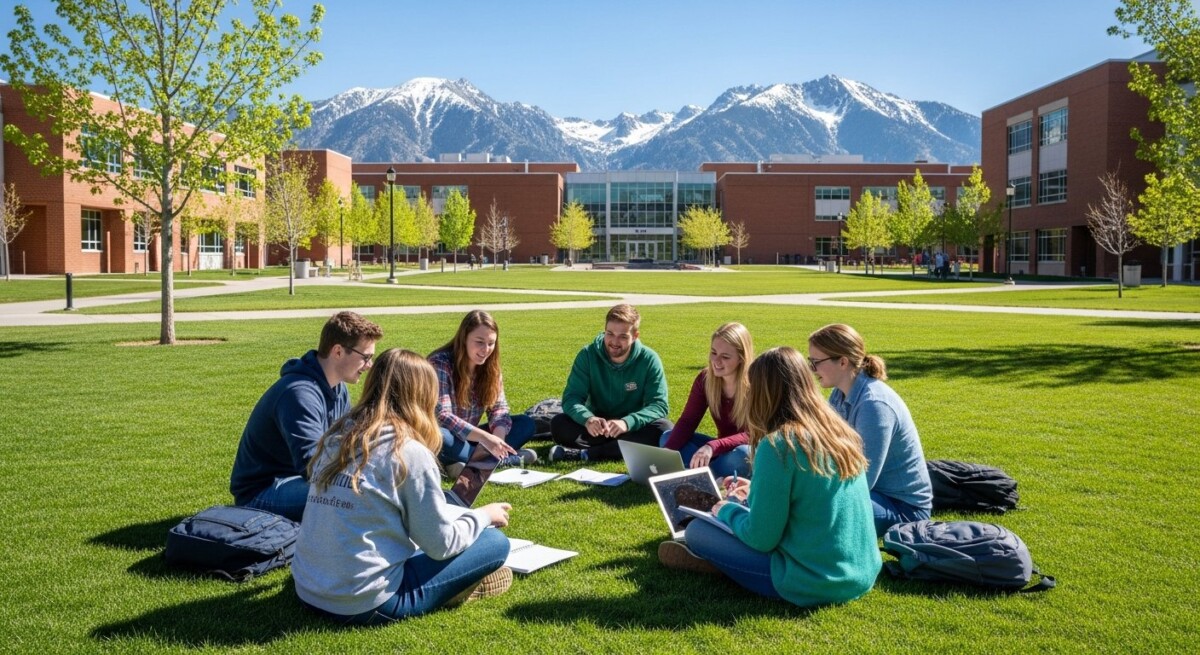
Wyoming offers a unique proposition for students seeking higher education: a combination of breathtaking landscapes, a strong sense of community, and some of the most affordable college options in the United States. For students and families focused on managing education costs without sacrificing quality, Wyoming’s public institutions present a compelling value proposition. The state’s commitment to accessible education, coupled with its relatively low cost of living, creates an environment where earning a degree can be a financially sound investment rather than a burdensome debt sentence. This guide explores Wyoming’s lowest cost colleges and academic programs, providing a roadmap to affordable credentials that align with both personal aspirations and practical career outcomes.
The Wyoming Community College System: A Foundation of Affordability
At the heart of affordable higher education in Wyoming lies its statewide community college system. This network of seven colleges serves every region, ensuring that residents have access to low-cost, high-quality instruction close to home. Tuition for Wyoming residents at these institutions is consistently among the lowest in the nation, a strategic effort by the state to build a skilled workforce. For students beginning their academic journey, these colleges offer associate degrees, certificates, and workforce training programs that provide direct pathways to employment or seamless transfer to four-year universities. The cost savings from completing general education requirements at a community college before transferring are substantial, often cutting the total price of a bachelor’s degree by a third or more.
Beyond low tuition, these colleges frequently offer additional financial incentives. Many have “Promise” or “Guarantee” programs that cover remaining tuition and fees for qualifying students after federal aid is applied. They also maintain strong partnerships with local industries, leading to programs with high job placement rates in fields like energy technology, nursing, and industrial trades. This practical focus ensures that the low cost of education translates directly into a strong return on investment through gainful employment. For a deeper look at non-traditional educational structures that can further reduce costs, our guide to non-traditional academic programs explores alternative pathways.
University of Wyoming: Flagship Education at a Remarkable Value
The University of Wyoming (UW) stands as the state’s sole public four-year university, and it leverages that position to offer an unparalleled value. UW’s tuition for in-state students is notably lower than that of flagship universities in neighboring states, making it a cornerstone of Wyoming’s low-cost education landscape. The university provides a comprehensive range of bachelor’s, master’s, and doctoral programs, with particular strengths in areas critical to the state’s economy and identity: energy resources, agriculture, environmental sciences, and education. The low student-to-faculty ratio fosters a personalized learning environment often absent at larger, more expensive institutions.
UW’s commitment to affordability extends beyond tuition. The university administers a robust program of need-based and merit-based scholarships, many funded by the state’s mineral royalties. Programs like the “Brown and Gold Commitment” provide guaranteed scholarship amounts based on GPA and test scores. Furthermore, UW has developed innovative, low-cost degree completion options, including online programs that allow students to work while they learn. These programs are designed for the modern learner, offering flexibility without a premium price tag. Students planning their degree path should consult detailed college tuition information to model total costs accurately.
High-Value, Low-Cost Academic Programs in Key Industries
Choosing an affordable institution is the first step; selecting a high-value program is the second. Wyoming’s colleges have strategically aligned their most affordable academic programs with high-demand careers in the region. These programs often feature lower lab or course fees, have strong internship pipelines, and lead to certifications or degrees that employers actively seek.
Key low-cost, high-return program clusters include:
- Energy Technology and Trades: Programs in petroleum technology, electrical technology, and process plant operations. These typically feature hands-on training and near-100% job placement due to Wyoming’s energy sector.
- Healthcare: Associate degree nursing (ADN), certified nursing assistant (CNA), and medical laboratory technology. Community colleges offer these at a fraction of the cost of private health schools.
- Business and Information Technology: Associate of Applied Science in business management, computer information systems, and accounting. These provide a quick, affordable entry into stable office careers.
- Education: Paraprofessional educator and early childhood development certificates, often with pathways to complete teaching degrees at UW with scholarships for commitment to teach in Wyoming.
- Agriculture and Ranch Management: Programs leveraging Wyoming’s rural economy, often including practical experience on college-run farms or ranches.
The affordability of these programs is not an indicator of lower quality. On the contrary, their close ties to industry advisors ensure curriculum relevance, and their low cost is a function of state subsidy and efficient delivery. For students interested in fully online versions of such value-driven programs, our resource on E-Learning academic programs details how digital delivery can further reduce costs.
Maximizing Financial Aid and Scholarship Opportunities in Wyoming
Low published tuition is only part of the affordability equation. Wyoming offers a layered system of financial aid that can further reduce net price to near zero for many students. The cornerstone is the Wyoming Hathaway Scholarship, a merit-based award available to Wyoming high school graduates attending any eligible Wyoming college or university. Hathaway awards range from several hundred to several thousand dollars per semester, based on high school performance and rigor. When combined with federal Pell Grants, which are need-based and do not require repayment, a significant portion of tuition and fees can be covered before even considering loans.
Beyond these broad programs, a myriad of smaller, targeted scholarships exist. These are often funded by local communities, industries, and foundations. For example, students entering nursing programs may find scholarships from regional hospital foundations, while those in trades might access funds from local unions or energy companies. The key to unlocking this aid is proactive effort: completing the FAFSA (Free Application for Federal Student Aid) as early as possible, checking with college financial aid offices for institutional scholarships, and researching niche opportunities related to one’s intended field or personal background. Many Wyoming colleges employ dedicated financial aid counselors who assist students in this bundling process, ensuring they leave no money on the table.
Strategic Planning for a Low-Cost Wyoming Degree
Achieving a low-cost degree in Wyoming requires intentional planning from the outset. The most financially savvy path often involves starting at a local community college to complete an associate degree or general education requirements, then transferring to the University of Wyoming or another institution to complete a bachelor’s. Wyoming’s colleges have articulated transfer agreements, ensuring credits move seamlessly and students do not waste money on courses that won’t count toward their final degree. This “2+2” model can save tens of thousands of dollars.
Other strategies include leveraging concurrent or dual enrollment programs while in high school, where students earn college credits at little to no cost. Summer course loads at lower community college tuition rates can also accelerate time to degree, reducing overall living expenses. Furthermore, students should actively seek out paid internships, co-ops, or work-study positions related to their field. These provide income, reduce borrowing needs, and enhance employability upon graduation. The goal is to view the educational journey holistically, minimizing costs at every stage while maximizing the value of each dollar and credit hour invested.
Frequently Asked Questions
What is the absolute lowest cost college option in Wyoming?
For most Wyoming residents, the lowest published tuition and fees are found at the state’s seven community colleges. When combined with federal Pell Grants and the Hathaway Scholarship, net cost for qualifying students can often be reduced to zero for tuition and fees, leaving only books and living expenses.
Do out-of-state students qualify for low tuition in Wyoming?
Out-of-state tuition is significantly higher. However, some neighboring state residents may qualify for reduced rates through reciprocity agreements, and certain high-demand programs may offer waivers. The most reliable low-cost path is for Wyoming residents.
Are online programs from Wyoming colleges cheaper?
Often, yes. Many Wyoming colleges charge the same in-state tuition rate for online courses regardless of where the student lives, effectively offering in-state rates to out-of-state online learners. Additionally, online study eliminates commuting and can allow students to maintain employment.
How does Wyoming’s cost of living affect total education expenses?
Wyoming’s cost of living, particularly in smaller communities, is generally lower than the national average. This means expenses for housing, food, and transportation while attending college are more manageable, contributing significantly to the overall affordability of Wyoming’s lowest cost colleges and academic programs.
What if my desired program isn’t offered at a low-cost Wyoming school?
Explore related programs that provide foundational skills, or consider completing all possible general education requirements in Wyoming before transferring to a more specialized (and potentially more expensive) institution elsewhere. This still captures substantial savings.
Wyoming’s approach to higher education demonstrates that a quality degree does not have to come with a paralyzing debt burden. By strategically leveraging the state’s community college system, the value-focused University of Wyoming, and a robust financial aid landscape, students can access career-ready education at a responsible cost. The key is informed, proactive planning: researching programs, understanding true net price, and mapping a credit-efficient pathway. For those willing to engage in this process, Wyoming’s lowest cost colleges and academic programs offer a proven route to personal and professional advancement grounded in financial reality.
About the Author: Michael Anderson