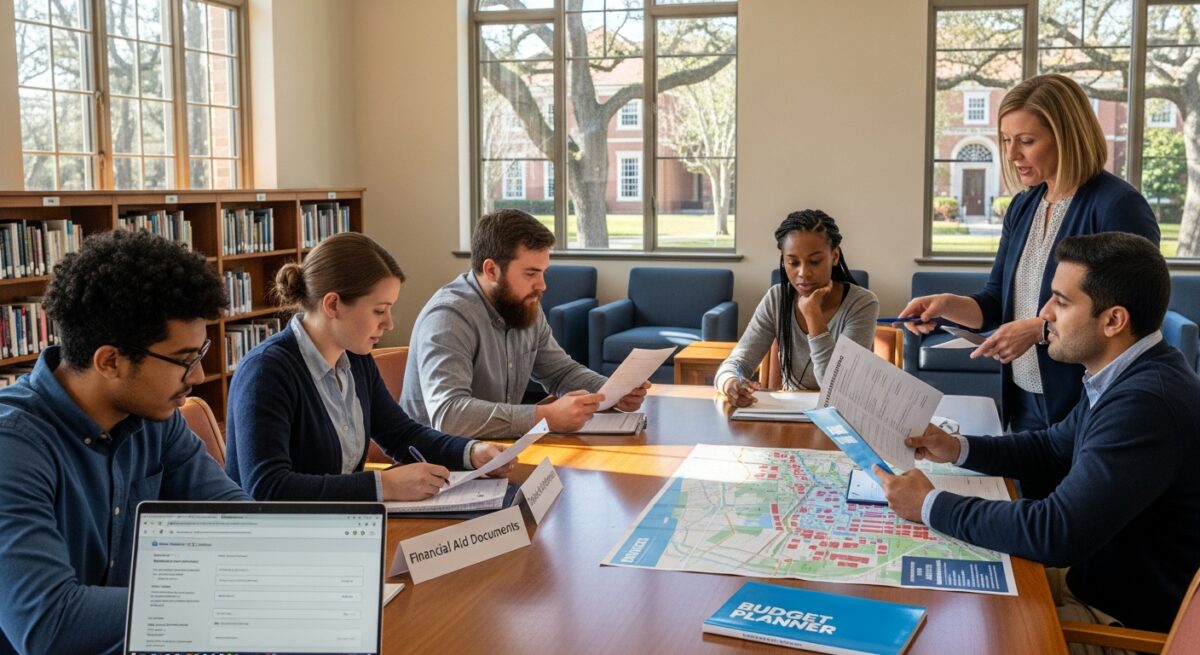
Rhode Island may be the smallest state, but its higher education landscape is both dense and diverse. For students who need flexibility, balancing work, family, or military service with academic goals, Rhode Island universities with online learning opportunities offer a practical path to a degree without relocating or quitting a job. The Ocean State is home to respected public research universities, private liberal arts colleges, and specialized institutions that have invested heavily in digital classrooms, asynchronous courses, and hybrid programs. Whether you are a working professional seeking a graduate certificate or a high school graduate looking for an affordable bachelor’s degree, the options available today are more varied and accessible than ever before. This article walks through the key players, program types, financial considerations, and strategies for choosing the right online fit within Rhode Island’s higher education ecosystem.
Why Consider Online Programs in Rhode Island?
Rhode Island’s compact geography means that even its traditional on-campus students often commute from neighboring states like Massachusetts and Connecticut. For online learners, this geographic reality translates into a unique advantage: many Rhode Island institutions design their online offerings to serve a regional audience that values both academic rigor and schedule flexibility. The state’s economy relies heavily on healthcare, education, manufacturing, and marine trades, and several universities have tailored online degrees to meet workforce demands in these sectors. Additionally, Rhode Island universities with online learning opportunities frequently partner with local employers to offer tuition discounts or cohort-based programs for working adults. This alignment between curriculum and career outcomes makes online study in Rhode Island a strategic move for students who want to advance without pausing their income.
University of Rhode Island: The Flagship Online Provider
The University of Rhode Island (URI) is the state’s flagship public research university and its most comprehensive provider of online education. URI’s Online and Continuing Education division offers more than 30 fully online degree and certificate programs. These span undergraduate completion programs, graduate degrees, and professional certificates in fields like nursing, cybersecurity, data science, and environmental management. URI’s online courses are taught by the same faculty who teach on campus, ensuring academic quality and rigorous assessment. The university uses Canvas as its learning management system and provides virtual tutoring, library access, and career counseling to remote students. For Rhode Island residents, URI’s in-state tuition rates make online degrees particularly affordable compared to private alternatives. The university also accepts transfer credits from community colleges, making it a popular choice for students who start at the Community College of Rhode Island (CCRI) and want to complete a bachelor’s degree online.
Notable Online Programs at URI
Among URI’s online offerings, the RN to BSN program stands out as a pipeline for registered nurses seeking a bachelor’s degree without interrupting hospital shifts. The program is fully asynchronous, allowing students to log in at any time. Another high-demand option is the Master of Science in Cybersecurity, which prepares students for roles in defense, finance, and government. URI also offers an Online MBA with concentrations in supply chain management, marketing, and finance. Each program includes a capstone project or practicum that connects classroom theory to real-world problems. For students exploring different academic paths, the degree pathways for students resource can help compare online programs across multiple institutions and identify transfer-friendly options.
Rhode Island College: Affordable Flexibility for Undergraduates
Rhode Island College (RIC) is the state’s oldest public college and a strong choice for undergraduate online learners. RIC’s online degree completion programs are designed primarily for students who have earned some college credits elsewhere and need a flexible route to a bachelor’s degree. The college offers fully online bachelor’s degrees in areas such as general studies, psychology, and criminal justice. RIC also provides individual online courses that can be taken as a non-degree student, which is helpful for professionals who need a specific prerequisite for graduate school or licensure. Tuition at RIC is among the lowest in the state for online programs, and the college participates in the Rhode Island Promise scholarship program, which covers tuition for eligible in-state students at CCRI. RIC’s online platform integrates with the state’s virtual academic advising network, giving students access to personalized degree planning tools.
Community College of Rhode Island: The Gateway to Online Learning
Community College of Rhode Island (CCRI) is the state’s only public community college and a critical entry point for online education. CCRI offers dozens of associate degree programs that can be completed entirely online, including business administration, computer science, liberal arts, and early childhood education. The college’s online courses are typically offered in eight-week accelerated terms, which allows students to progress quickly while working full time. CCRI also has a robust set of online certificate programs in fields like medical coding, paralegal studies, and digital marketing. One of the most appealing features of CCRI’s online offerings is the transfer articulation agreements with URI and RIC. Students who earn an associate degree online at CCRI can transfer seamlessly into a bachelor’s program at a four-year Rhode Island university, often with junior standing. This pathway can reduce the total cost of a bachelor’s degree by tens of thousands of dollars.
Private Universities: Brown, Bryant, and Johnson & Wales
Rhode Island is also home to several private universities that offer online or hybrid learning opportunities. Brown University, an Ivy League institution, provides a limited but prestigious set of online offerings through its School of Professional Studies. These include graduate certificates in data science, cybersecurity, and healthcare leadership, as well as the Executive Master in Cybersecurity. Brown’s online courses are delivered in a synchronous format, with live classes held in the evenings to accommodate working professionals. Tuition is higher than public options, but the Ivy League credential and networking opportunities can justify the cost for career changers and executives.
Bryant University, located in Smithfield, offers an Online MBA and a Master of Science in Global Supply Chain Management. Bryant’s online programs use a cohort model, where students progress through the curriculum together, building professional relationships and accountability. The university provides a dedicated online success coach for each student. Johnson & Wales University (JWU), with its Providence campus, has a strong reputation for career-focused education. JWU offers online bachelor’s and master’s degrees in hospitality, business, culinary arts management, and criminal justice. JWU’s online platform emphasizes hands-on learning through virtual simulations and industry projects. For students interested in healthcare, JWU also offers an online Master of Science in Physician Assistant Studies (hybrid format) and a Bachelor of Science in Nursing (RN to BSN track).
Financial Aid and Tuition Considerations
Online students at Rhode Island universities are eligible for the same federal financial aid as on-campus students, including Pell Grants, federal student loans, and work-study programs (if applicable). The Free Application for Federal Student Aid (FAFSA) is the first step for any student seeking aid. Rhode Island residents attending public universities online can also qualify for state-based grants and scholarships, such as the Rhode Island Higher Education Grant. Many private universities offer merit-based scholarships for online students, though eligibility criteria vary. It is important to check whether an online program charges a distance learning fee or a technology fee, as these can add several hundred dollars per semester. Some employers in Rhode Island, particularly hospitals and manufacturing companies, offer tuition reimbursement programs for employees pursuing online degrees in relevant fields. Students should speak with their human resources department before enrolling.
When comparing costs, consider the total cost of attendance, including tuition, fees, books, and any required on-campus residencies. Some online programs require a one-week intensive on campus each year, which adds travel and lodging expenses. Public universities like URI and RIC offer the lowest tuition rates for in-state students, while private institutions like Brown and Bryant charge premium rates but may offer larger scholarships. In our guide on how to earn a nursing school degree online, we explain how RN to BSN programs can be completed with minimal clinical disruption.
How to Choose the Right Online Program
Selecting the best Rhode Island university for your online education requires evaluating several factors beyond tuition cost. Start by confirming that the program is accredited by a recognized accrediting body. For most programs, regional accreditation (from the New England Commission of Higher Education) is the gold standard. Next, examine the delivery format: asynchronous courses allow you to learn on your own schedule, while synchronous classes require live attendance at set times. Consider your learning style and work schedule before choosing. Also review the program’s graduation rate and job placement statistics. Many universities publish these metrics on their websites. Finally, reach out to an admissions counselor or program coordinator to ask specific questions about transfer credits, faculty qualifications, and technical support for online students.
Here are key questions to ask before applying:
- Is the program fully online, or are there required on-campus sessions?
- What is the typical class size for online courses?
- Are online students eligible for the same career services as on-campus students?
- How does the university handle proctored exams for remote students?
- Is there a dedicated online student orientation or success coach?
Asking these questions early can prevent surprises later. Many Rhode Island universities offer virtual information sessions or recorded webinars that allow prospective students to experience the online platform before committing. Take advantage of these opportunities to assess the user interface and the responsiveness of faculty.
Frequently Asked Questions
Can I complete an entire degree online through a Rhode Island university?
Yes. Several Rhode Island universities offer fully online degree programs at the associate, bachelor’s, and master’s levels. URI, RIC, and CCRI have the largest selections of fully online programs. Private universities like Bryant and JWU also offer fully online options in specific fields.
Are online degrees from Rhode Island universities respected by employers?
Yes, provided the institution is regionally accredited. Employers generally value the credential itself rather than the delivery method. Many online programs are identical in curriculum and faculty to their on-campus counterparts.
Do online students pay the same tuition as on-campus students?
It depends. Public universities like URI and RIC charge the same per-credit tuition for online and on-campus courses for in-state students. Out-of-state students may pay a higher rate for online programs. Private universities typically charge a flat online tuition rate that is the same for all students regardless of residency.
Can I transfer credits from an online program to another university?
Transfer credit policies vary by institution. If you plan to transfer, check with the receiving university about its transfer credit policy before enrolling. Many Rhode Island universities have articulation agreements that guarantee transfer of credits from CCRI and other accredited institutions.
Is financial aid available for online students?
Yes. Online students who are enrolled at least half-time in a degree-granting program are eligible for federal financial aid. State grants and private scholarships may also be available. Complete the FAFSA to determine eligibility.
The landscape of online education in Rhode Island continues to evolve, with universities adding new programs and improving digital infrastructure each year. Whether you are starting your college journey at CCRI, completing a bachelor’s degree at RIC, or pursuing an advanced credential at URI or a private university, the key is to find a program that aligns with your career goals, budget, and schedule. By researching accreditation, comparing costs, and asking the right questions, you can make an informed decision that sets you up for success. Rhode Island universities with online learning opportunities are ready to help you take the next step, no matter where you are starting from.
About the Author: Olivia Martin