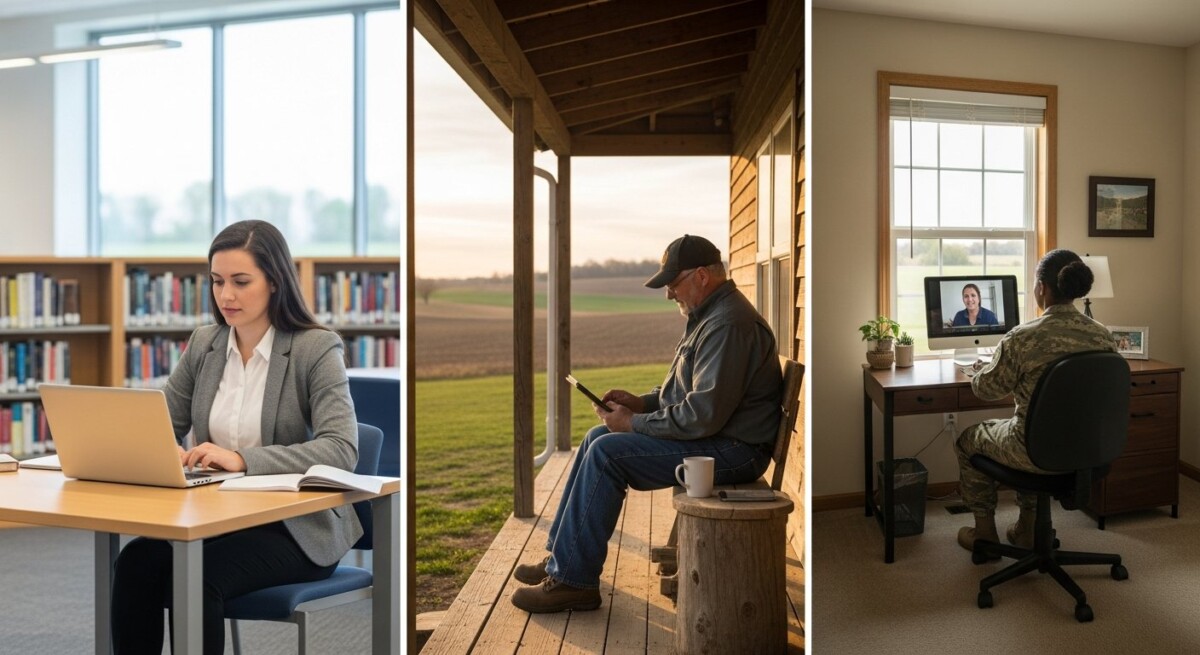
Missouri has quietly become a powerhouse for flexible, affordable degree pathways. Whether you are a working parent in St. Louis, a farm owner in the Bootheel, or a military spouse near Fort Leonard Wood, the ability to earn a respected credential without relocating is no longer a distant promise. It is a practical reality. Today, Missouri higher education with online program options serves thousands of students who need to balance jobs, families, and military commitments while advancing their careers. This article unpacks the landscape, the costs, the top institutions, and the strategies that make online learning in the Show-Me State a smart investment.
Why Missouri Is a Leader in Online Degree Access
Missouri’s public university system has invested heavily in digital infrastructure over the past decade. The University of Missouri System, which includes flagship Columbia campus along with Missouri S&T, UMKC, and UMSL, operates one of the most comprehensive online portfolios in the Midwest. Beyond the flagship, regional universities like Missouri State, Southeast Missouri State, and Northwest Missouri State have all built robust virtual campuses. This means students are not limited to a single provider. They can compare programs across multiple accredited institutions while staying within the state’s tuition structure.
The Missouri Department of Higher Education and Workforce Development reports that online enrollment has grown by more than 40% since 2020. Employers in the state have also become more accepting of online credentials, especially when the degree comes from a regionally accredited Missouri institution. This shift is critical. It means that a graduate with a fully online bachelor’s in nursing or business from a Missouri public university faces the same hiring prospects as a traditional on-campus graduate. The stigma that once surrounded virtual learning has largely evaporated, replaced by a focus on competency and outcomes.
Accredited Programs and Institutional Quality
When evaluating Missouri higher education with online program options, accreditation is the first filter. All public universities in Missouri maintain regional accreditation through the Higher Learning Commission (HLC). This is the gold standard. It ensures that credits transfer smoothly and that employers and graduate schools recognize the degree. Several private institutions in Missouri also offer strong online programs, including Washington University in St. Louis and Maryville University. However, public universities typically provide the most affordable tuition for state residents.
Programmatic accreditation matters for specific fields. For example, online nursing programs should hold CCNE or ACEN accreditation. Business programs should carry AACSB or ACBSP accreditation. Education programs need CAEP or state approval. Before enrolling, verify that your intended program meets these standards. A degree from an unaccredited provider can waste time and money, and it may not qualify you for licensure in Missouri.
Top Missouri Public Universities Offering Online Degrees
Here are the major public institutions with extensive online offerings, listed with their primary strengths:
- University of Missouri-Columbia (Mizzou Online): Offers over 100 online degrees and certificates including journalism, health sciences, and business administration. Mizzou’s online MBA is consistently ranked among the top 50 nationally.
- Missouri State University: Strong in education, nursing (RN to BSN), and computer science. Their online graduate programs in public administration and data analytics are growing quickly.
- University of Missouri-Kansas City (UMKC): Known for online degrees in healthcare administration, criminal justice, and liberal arts. UMKC also offers a fully online Pharm.D. pathway for certain transfer students.
- University of Missouri-St. Louis (UMSL): A leader in online cybersecurity, information systems, and supply chain management. UMSL’s online bachelor’s in cybersecurity holds NSA/DHS designation as a Center of Academic Excellence.
- Southeast Missouri State University (SEMO): Offers affordable online degrees in general studies, business administration, and elementary education. SEMO is especially popular among transfer students from community colleges.
Each of these institutions provides dedicated online student support services, including virtual tutoring, career counseling, and library access. When you compare Missouri higher education with online program options, these support structures often determine whether a student persists to graduation. Look for programs that assign an academic advisor specifically for online learners.
Cost, Financial Aid, and Affordability
Affordability is the primary reason many students choose online programs. Missouri public universities typically charge lower online tuition rates than their on-campus equivalents, especially for courses delivered entirely through digital platforms. For the 2025-2026 academic year, in-state undergraduate online tuition at Missouri public universities ranges from approximately $250 to $400 per credit hour. Out-of-state students often pay slightly more, but many Missouri institutions offer a flat online rate that is lower than traditional out-of-state tuition.
Financial aid works the same for online students as it does for campus-based students. You must complete the Free Application for Federal Student Aid (FAFSA) each year. Missouri residents may also qualify for state grants such as the Access Missouri Financial Assistance Program and the A+ Scholarship Program (for community college transfers). Military-connected students should check the Missouri Returning Heroes Education Act and the Missouri National Guard Tuition Assistance Program.
Many employers in Missouri also offer tuition reimbursement benefits. Companies like Edward Jones, BJC HealthCare, and Cerner (now part of Oracle Health) have partnerships with local universities to offer discounted online tuition to employees. Before taking out loans, explore whether your employer covers part or all of your educational costs. In our guide on the future of higher education, we explain how employer-sponsored learning is reshaping degree pathways across the United States.
Choosing the Right Online Program for Your Goals
Selecting from the many Missouri higher education with online program options requires a clear understanding of your career objectives. If you are pursuing a bachelor’s degree to qualify for a promotion in your current field, look for programs that offer prior learning assessment (PLA) credit. PLA allows you to earn college credit for work experience, military training, or professional certifications. Several Missouri universities, including UMSL and Missouri State, award up to 30 credit hours through PLA, which can cut your degree completion time in half.
If you are considering graduate school, focus on program reputation and faculty expertise. An online master’s in education from a CAEP-accredited Missouri university carries weight in school districts throughout the Midwest. An online MBA from an AACSB-accredited Missouri school is respected by regional employers. Do not choose solely based on price. A slightly more expensive program with strong career placement services and alumni networks often delivers better return on investment.
For students exploring different academic tracks and comparing college degree options, degree pathways for students provide structured roadmaps that align coursework with specific career outcomes. These resources help you visualize how each course connects to real-world job requirements, which is especially valuable when you are learning online without the informal networking of a physical campus.
Technology Requirements and Learning Environment
Online learning in Missouri has matured beyond simple video lectures. Most programs use learning management systems like Canvas or Blackboard, supplemented by synchronous Zoom sessions, discussion boards, and virtual labs. You will need a reliable internet connection (at least 25 Mbps download speed), a computer that is less than four years old, and a webcam for proctored exams. Some programs in nursing and health sciences require clinical placement software and background check subscriptions.
Missouri libraries, including the Missouri State Library and many public libraries, offer free Wi-Fi hotspots that students can check out for extended periods. If your home internet is unreliable, this is a practical workaround. Additionally, many Missouri universities provide loaner laptops to online students who demonstrate financial need. Do not let technology barriers stop you. Reach out to the online student services office before you enroll to discuss available resources.
Frequently Asked Questions
Are online degrees from Missouri universities respected by employers?
Yes, when the institution is regionally accredited by the Higher Learning Commission. Missouri employers treat online degrees from public universities the same as on-campus degrees. Always verify accreditation before enrolling.
Can I use federal financial aid for online programs in Missouri?
Absolutely. Online students at accredited Missouri institutions qualify for federal Pell Grants, Direct Loans, and work-study (if available). Complete the FAFSA to determine your eligibility.
How long does it take to complete an online bachelor’s degree in Missouri?
Most online bachelor’s programs require 120 credit hours. Full-time students (15 credits per semester) can finish in four years. Accelerated programs and prior learning credit can reduce that to two to three years.
Do Missouri online programs charge out-of-state tuition?
Some do, but many Missouri public universities offer a flat online rate that is the same for in-state and out-of-state students. Check the specific program’s tuition page for details.
What support services are available for online students?
Most Missouri universities offer online tutoring, virtual library access, career counseling, academic advising, and technical support. Some also provide mental health counseling via telehealth.
The landscape of Missouri higher education with online program options continues to expand as technology improves and employer acceptance grows. By choosing an accredited program that aligns with your career goals, taking advantage of financial aid and employer benefits, and leveraging support services designed for digital learners, you can earn a valuable degree without putting your life on hold. The Show-Me State has shown that flexible, high-quality education is not a compromise. It is a strategic choice for a rapidly changing world.
About the Author: Lisa Bennett