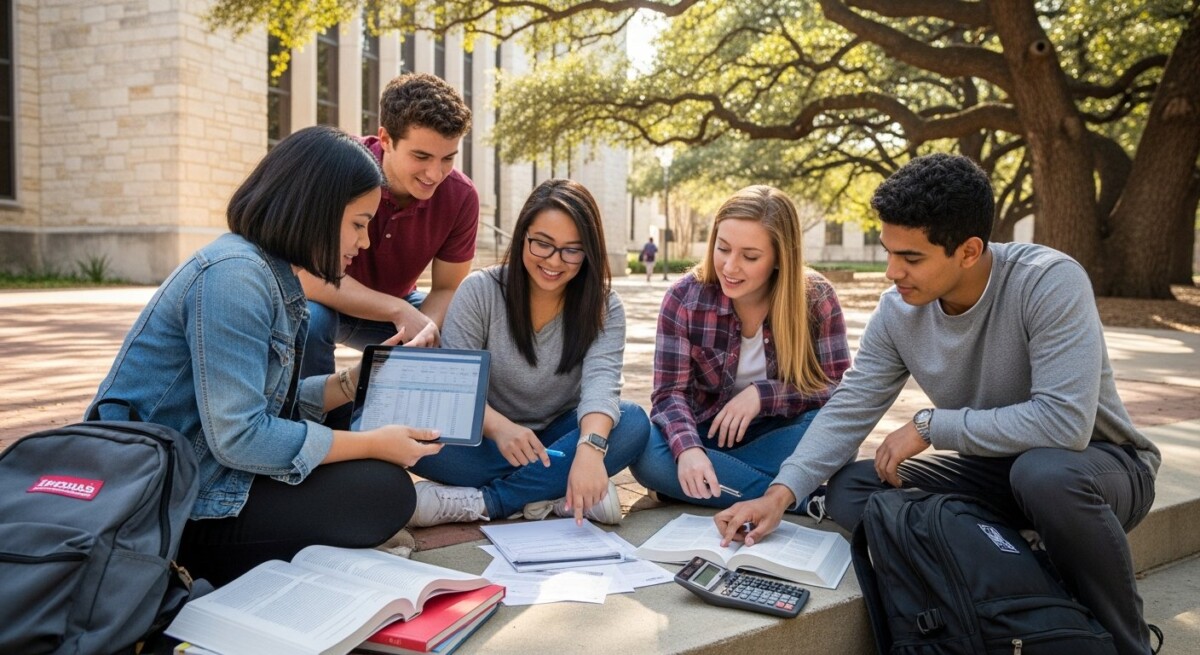
When families begin planning for higher education in the Lone Star State, the first question is often about money. How much does a year of college actually cost in Texas? The answer is not a single number. It depends on whether you choose a public university, a private institution, or a community college. It also depends on whether you qualify for in-state tuition. Understanding the Texas typical annual college tuition cost is the foundation of smart financial planning. Without this knowledge, families risk overborrowing or missing out on affordable options.
Texas offers some of the most diverse higher education options in the country. From the University of Texas system to Texas A&M, Texas Tech, and numerous community colleges, the range of prices is wide. The Texas typical annual college tuition cost for a public four-year university is lower than the national average. This makes Texas an attractive destination for both residents and out-of-state students. However, hidden fees, housing, and textbooks can add thousands to the final bill. This article breaks down the real costs, explains what drives them, and provides actionable steps to reduce your family’s expenses.
Breaking Down Tuition and Fees at Texas Public Universities
For the 2025-2026 academic year, the average tuition and required fees for a Texas resident attending a public four-year university is approximately $10,560 per year. This figure comes from the Texas Higher Education Coordinating Board. Non-resident students pay significantly more, often between $28,000 and $40,000 annually. The Texas typical annual college tuition cost at public universities has risen steadily over the past decade, but it remains below the national average for in-state students.
Several factors influence these numbers. Each university sets its own tuition rates, and the Texas Legislature also plays a role by setting limits on mandatory fees. The largest components of the total cost include designated tuition, statutory tuition, and mandatory fees for services like health centers, recreation, and technology. For example, at the University of Texas at Austin, in-state tuition and fees for 2025-2026 total about $11,750 per year. At Texas A&M University, the figure is roughly $12,200. These numbers do not include housing, meals, or books.
Students should also understand the difference between “sticker price” and “net price.” The sticker price is the published cost. The net price is what students actually pay after grants and scholarships. According to data from the National Center for Education Statistics, the average net price for Texas public four-year universities is around $15,000 to $18,000 per year for in-state students. This includes tuition, fees, room, and board minus financial aid. The Texas typical annual college tuition cost is therefore a starting point, not the final number.
Private Universities and Community College Options
Private universities in Texas charge higher tuition but also offer more institutional aid. Schools like Rice University, Southern Methodist University, and Baylor University have sticker prices exceeding $50,000 per year. However, generous scholarship packages can bring the net cost down significantly. The Texas typical annual college tuition cost at private institutions is not representative of what most families pay, because many students receive discounts. Rice University, for example, meets 100% of demonstrated financial need. This means low-income students may pay very little.
Community colleges remain the most affordable path. The Texas typical annual college tuition cost at a community college for in-state students is approximately $1,800 to $3,000 per year. This makes them an excellent option for the first two years of a bachelor’s degree. Many students complete an associate degree and then transfer to a four-year university. This strategy can cut the total cost of a bachelor’s degree in half. For example, Austin Community College charges about $85 per credit hour for in-district students. A full-time load of 30 credits per year costs roughly $2,550.
For those seeking flexibility and lower upfront costs, online programs from Texas institutions also offer competitive rates. For more information about navigating these options, academic degree resources provide clear comparisons of different pathways.
The True Cost Beyond Tuition: Room, Board, and Books
Tuition is only part of the equation. When families calculate the Texas typical annual college tuition cost, they must also factor in living expenses. On-campus room and board at Texas public universities ranges from $10,000 to $14,000 per year. Off-campus housing can be slightly cheaper in some cities, but it often requires a lease and utility payments. The total cost of attendance (COA) includes tuition, fees, room, board, books, transportation, and personal expenses. The COA is the number that financial aid offices use to determine eligibility.
Books and supplies add another $1,000 to $1,500 per year. This figure can be reduced by renting textbooks, buying used copies, or using library reserves. Transportation costs vary widely. A student living on campus may spend very little on gas, while a commuter could spend $2,000 or more annually. Personal expenses like laundry, toiletries, and entertainment typically run $2,000 to $3,000 per year. Altogether, the total cost of attendance for a Texas resident at a public university often falls between $26,000 and $32,000 per year.
For a comparison with other states, our guide on Louisiana average annual university tuition costs shows how Texas stacks up against its neighbor. Louisiana’s public tuition is slightly lower, but Texas offers more scholarship opportunities and a larger university system.
Financial Aid and Scholarships: Reducing the Actual Cost
The good news is that few students pay the full sticker price. The Texas typical annual college tuition cost is significantly reduced by financial aid. The first step is filing the Free Application for Federal Student Aid (FAFSA). This form determines eligibility for federal grants, work-study, and student loans. The Texas state government also offers grants like the Texas Grant and the TEXAS Grant. These programs are need-based and can cover a large portion of tuition.
Merit-based scholarships are another major factor. Many Texas universities automatically consider applicants for scholarships based on GPA and test scores. For example, the University of Texas at Dallas offers the Academic Excellence Scholarship, which can cover up to full tuition for high-achieving students. Private scholarships from community organizations, employers, and national programs also help. The average Texas student receives about $8,000 in grants and scholarships per year. This brings the net tuition cost down considerably.
Students should also consider work-study programs. These allow students to earn money through part-time jobs on campus. The federal work-study program pays at least the federal minimum wage. Many Texas universities also have their own institutional work-study programs. Combining work-study with scholarships can eliminate the need for student loans entirely.
Strategies to Lower Your Texas College Tuition Bill
Families can take several proactive steps to reduce the Texas typical annual college tuition cost. The most effective strategy is to start planning early. Here are three actionable approaches:
- Dual credit courses in high school: Many Texas high schools offer dual credit programs through local community colleges. These courses count toward both high school graduation and a college degree. Completing 30 credit hours of dual credit can save one full year of tuition, which is roughly $10,000 at a public university.
- Start at a community college: As mentioned earlier, the Texas typical annual college tuition cost at a community college is a fraction of the cost at a four-year university. Students can complete core curriculum requirements for under $3,000 per year and then transfer. Many Texas public universities have guaranteed transfer agreements with community colleges.
- Live at home: Living with parents during college eliminates room and board costs. This can save $10,000 to $14,000 per year. Combined with community college attendance, this strategy can make a bachelor’s degree cost less than $20,000 total.
Another powerful tool is the Texas Tuition Promise Fund. This prepaid tuition plan allows families to lock in current tuition rates for future attendance at Texas public universities. It is available for children from birth through 9th grade. The plan covers up to 120 semester credit hours. It is one of the most effective ways to hedge against tuition inflation.
Regional Variations Across Texas
The Texas typical annual college tuition cost varies by region. Universities in major metropolitan areas like Austin, Dallas, and Houston tend to have higher tuition and living costs. Schools in smaller cities like Lubbock, San Marcos, and Nacogdoches are often more affordable. For example, Texas Tech University in Lubbock has an in-state tuition and fee total of about $10,200 per year. The University of Texas at Austin, in a more expensive city, is around $11,750. The difference seems small, but when combined with housing costs, it becomes significant.
Housing costs in Austin are among the highest in the state. A one-bedroom apartment near the UT Austin campus can cost $1,500 per month. In Lubbock, the same apartment might cost $900. Over four years, this difference adds up to nearly $30,000. Students should consider not only tuition but also the cost of living in the city where the university is located. The Texas typical annual college tuition cost is just one piece of the puzzle.
For families considering out-of-state options, our article on Montana college tuition costs: a complete financial estimate provides a useful comparison. Montana’s public tuition is similar to Texas for residents, but out-of-state rates are much higher.
Frequently Asked Questions
What is the average tuition for a Texas public university in 2026?
The average in-state tuition and required fees at Texas public four-year universities is approximately $10,560 per year for the 2025-2026 academic year. This number increases by about 3% to 5% each year.
Is Texas tuition cheaper than other states?
Yes. The Texas typical annual college tuition cost for in-state students is below the national average. Texas ranks around 25th in the nation for public tuition affordability. Out-of-state tuition is higher but still competitive compared to coastal states.
How can I get in-state tuition in Texas if I move there?
To qualify for in-state tuition, you must establish residency in Texas. This generally requires living in the state for at least 12 months before the semester starts and showing intent to remain (e.g., getting a Texas driver’s license, registering to vote, and working in Texas).
Do Texas universities offer tuition freezes?
Some Texas universities offer guaranteed tuition plans. For example, the University of Texas system has a fixed tuition program. Students pay the same rate for four years as long as they stay enrolled continuously. This protects against annual increases.
What is the cheapest college in Texas?
The most affordable option is typically a community college. Among four-year public universities, Texas A&M International University and Sul Ross State University often have the lowest tuition rates. Private universities like Southwestern Assemblies of God University also offer low tuition.
Making Informed Decisions About College Costs
Understanding the Texas typical annual college tuition cost is the first step toward a debt-free degree. Texas offers a wide range of affordable options, from community colleges to prestigious private universities. The key is to research each school’s net price, apply for all available financial aid, and consider cost-saving strategies like dual credit and living at home. By taking a proactive approach, families can make higher education accessible without sacrificing quality. Start by visiting the College & Tuition website for more detailed guides on scholarships, financial aid, and university comparisons. The path to an affordable college education in Texas is clear. It just requires planning and the right information.
About the Author: Michael Grant