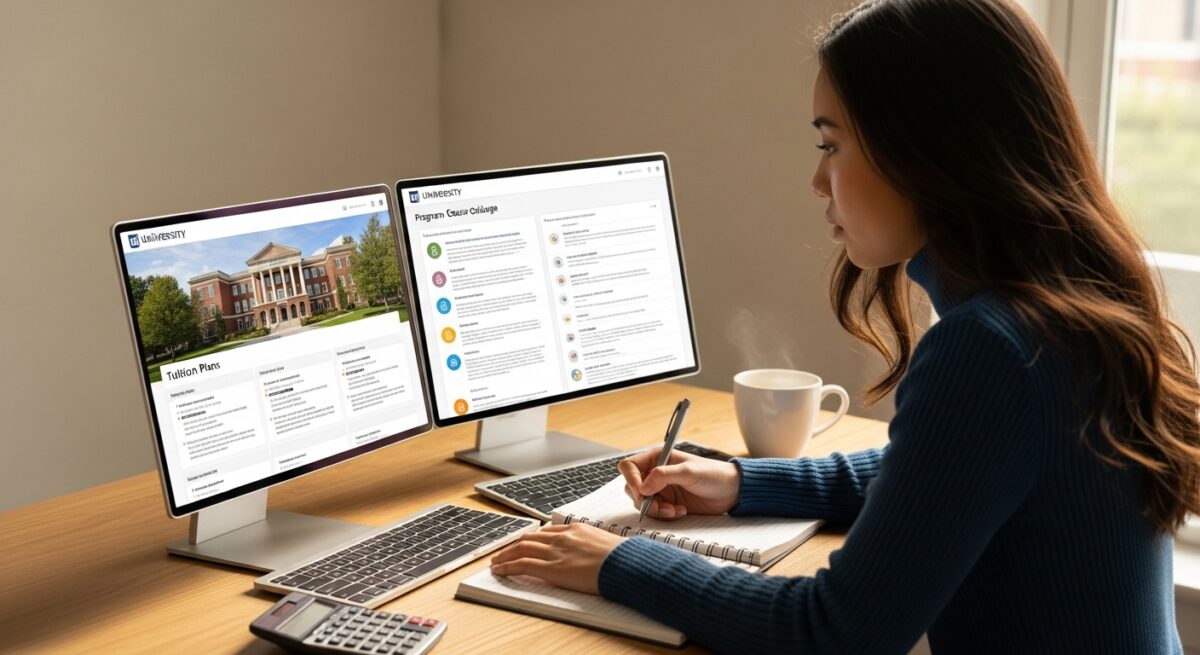
For students across Indiana and beyond, the pursuit of higher education no longer requires a physical commute to a campus quad. The landscape of learning has fundamentally shifted, with accredited online programs from reputable Indiana universities offering unprecedented flexibility, rigor, and opportunity. Whether you are a working professional seeking career advancement, a parent balancing family responsibilities, or a recent high school graduate looking for a more adaptable college experience, Indiana’s institutions have invested heavily in robust digital education. This expansion isn’t just about convenience, it’s about maintaining the high academic standards and respected credentials that define a Hoosier education, now delivered to wherever you have an internet connection. The key to navigating this promising field lies in understanding which programs carry the gold standard of accreditation and how they align with your personal and professional goals.
The Critical Importance of Regional Accreditation
Before exploring specific universities, understanding the cornerstone of quality in online education is non-negotiable: accreditation. Specifically, regional accreditation is the most recognized and respected form of institutional accreditation in the United States. For Indiana universities, this oversight comes from the Higher Learning Commission (HLC). This accreditation signifies that the entire institution meets rigorous standards for faculty qualifications, student support services, academic rigor, and financial stability. When you enroll in an online program from a regionally accredited Indiana university, you can be confident that your degree will be respected by employers, other academic institutions, and professional licensing boards.
The consequences of overlooking accreditation can be severe. Credits from a non-accredited institution often do not transfer to other colleges or universities. Furthermore, many employers have policies against recognizing degrees from unaccredited sources, and federal financial aid is exclusively available for students attending accredited institutions. When evaluating Indiana universities featuring accredited online programs, your first check should always be for regional accreditation from the HLC. This assurance protects your investment of time, money, and effort, ensuring your degree holds its value in the marketplace. For a broader perspective on how different states structure their online offerings, you can explore our analysis of Michigan’s top online colleges and universities, which face similar accreditation standards and quality considerations.
Leading Indiana Universities and Their Online Offerings
Indiana is home to a diverse array of public and private universities that have developed comprehensive online learning platforms. These institutions range from large research powerhouses to specialized schools, each bringing unique strengths to the virtual classroom.
Indiana University (IU) stands as a pioneer and leader in online education through its IU Online initiative. This system-wide effort coordinates online programs across all IU campuses, including Bloomington, Indianapolis (IUPUI), and regional locations. Students can access over 200 online degrees and certificates, from undergraduate business and nursing degrees to graduate programs in education, informatics, and public affairs. The strength of IU Online lies in its consistency: courses are developed by the same renowned faculty who teach on-campus, ensuring academic quality is uniform regardless of delivery mode.
Purdue University, another flagship institution, offers a vast portfolio of online programs primarily through Purdue Online. This includes everything from engineering and technology master’s degrees to undergraduate completion programs in organizational leadership. Notably, Purdue’s acquisition of Kaplan University led to the creation of Purdue University Global, a separate, online-focused institution designed for working adults. Purdue Global offers accelerated terms, competency-based education options, and extensive prior learning assessment, catering specifically to non-traditional students seeking flexible, career-relevant paths.
Ball State University has earned a strong reputation for its online graduate programs, particularly in education. Its Teachers College offers highly respected online master’s degrees, educational specialist degrees, and doctoral programs for educators and administrators. Beyond education, Ball State provides robust online options in fields like business administration, nursing, and architecture.
The University of Southern Indiana (USI) and Indiana State University (ISU) both provide significant online opportunities, often with a focus on accessibility and serving the regional population. USI’s online programs in health professions, business, and education are known for their supportive structure, while ISU offers popular online tracks in criminology, technology management, and nursing.
For students interested in specialized or language-focused curricula, it’s worth noting that many universities nationwide offer unique online courses. For instance, those seeking to study less commonly taught languages might find resources on where to take Arabic language courses online from universities, which highlights how niche academic interests can also be served through digital platforms.
Key Benefits of Choosing an Indiana-Based Online Program
Selecting an online program from an Indiana university offers distinct advantages beyond the simple convenience of remote learning. First, there is the benefit of in-state tuition rates. Many Indiana public universities offer online students the same lower tuition costs as their on-campus counterparts if they are Indiana residents, creating significant cost savings. Even for out-of-state students, online program tuition is often lower than standard non-resident on-campus rates, and some schools have simplified, flat-rate tuition for all online students regardless of location.
Second, these programs are designed with Indiana’s economy and job market in mind. Curriculum is frequently developed in consultation with Indiana industry leaders in sectors like advanced manufacturing, life sciences, logistics, and healthcare. This means the skills you acquire are directly relevant to employers within the state and the broader Midwest region, enhancing your career prospects locally. Furthermore, the alumni networks of Indiana universities are strong and active within the state, providing online graduates with valuable connections for networking and job placement.
Third, student support services for online learners have become highly sophisticated. Indiana universities now provide virtual access to academic advising, career counseling, tutoring, library resources, and technical support. This creates a comprehensive support system that mirrors the on-campus experience. Many programs also incorporate interactive elements like live virtual class sessions, discussion forums, and group projects to foster community and collaboration among online students.
Selecting the Right Online Program for Your Goals
With numerous options available, making an informed decision requires careful consideration of several factors. Start by clearly defining your objective: are you seeking career advancement, a complete career change, or foundational undergraduate education? Your goal will dictate whether you need a full degree, a graduate certificate, or individual professional development courses.
Next, scrutinize the program’s specific structure and requirements. Key questions to investigate include:
- Asynchronous vs. Synchronous Learning: Does the program use pre-recorded lectures you can complete on your own schedule (asynchronous), or does it require live online sessions at set times (synchronous)? Your personal schedule and learning style will determine which model is better.
- Clinical or Practicum Requirements: Programs in fields like nursing, counseling, and education often require in-person clinical hours or student teaching. Understand how these are arranged and if they can be completed in your local area.
- Technology and Proctoring: What software and hardware are required? Are exams proctored online, and if so, what does that process entail?
- Student Engagement Metrics: Look for indicators of a strong online community, such as active faculty participation in discussion boards, group project requirements, and virtual student organization opportunities.
It is also essential to verify that the specific program, not just the university, holds any necessary specialized or professional accreditation. For example, an online business program should be accredited by the AACSB, while an engineering program should hold ABET accreditation. This programmatic accreditation is a further mark of quality and is often required for professional licensure. As you compare different programs, consider exploring external resources that provide detailed comparisons of degree pathways for students, which can help contextualize how different online structures align with various career outcomes.
Navigating Financial Aid and Tuition for Online Study
Financing an online degree follows similar principles to traditional on-campus study, but with some important nuances. The first step for any student is to complete the Free Application for Federal Student Aid (FAFSA). Listing your chosen Indiana university on the FAFSA makes you eligible for federal grants, loans, and work-study funds. Importantly, your eligibility for federal aid is not affected by whether you study online or on-campus, provided the university and program are accredited.
Many Indiana universities also offer scholarships specifically for online students. These may be based on academic merit, financial need, field of study, or demographic factors. It is crucial to contact the university’s online learning office or financial aid office directly to inquire about these opportunities, as they may not be widely advertised. Additionally, employers often provide tuition reimbursement or assistance programs for employees pursuing job-relevant degrees. Check with your human resources department to understand your company’s policy, as this can substantially reduce out-of-pocket costs.
When budgeting, remember to account for all costs beyond tuition. While you may save on commuting and housing, there may be fees for online technology, course materials, and proctoring services. Some schools charge a lower “distance learning” fee instead of traditional activity and facility fees. Always request a detailed cost of attendance breakdown from the financial aid office to avoid surprises.
Frequently Asked Questions
Will my diploma say “online” on it?
No. Typically, diplomas from accredited Indiana universities do not differentiate between online and on-campus degrees. You will receive the same diploma as a student who attended physically, bearing only the name of the university and the degree conferred.
Can I complete an online degree faster than a traditional one?
Many Indiana universities offer accelerated online programs with shorter terms (e.g., 8-week sessions instead of 16-week semesters), allowing you to take more courses per year. Some, like Purdue Global, also offer competency-based models where you can progress by demonstrating mastery, potentially speeding up completion. However, the pace is often flexible, allowing you to slow down during busy life periods.
How do online students access campus resources like the library or career services?
Indiana universities provide online portals for these services. You will have remote access to digital library databases, e-books, and journal articles. Career services typically offer virtual appointments, online resume reviews, and digital job boards. Many also host virtual career fairs specifically for online students and alumni.
Are there opportunities for online students to connect with each other or faculty?
Yes. Programs build community through required discussion forums, group projects, and sometimes optional live video sessions. Many schools also have online student associations and host virtual networking events or webinars with faculty and industry guests.
Is an online degree from an Indiana university respected by employers?
Absolutely. Employers primarily care about the accreditation and reputation of the institution granting the degree. As long as the university is regionally accredited (like all major Indiana public universities), employers view the degree as legitimate and equivalent to an on-campus degree. The key is the credibility of the institution, not the delivery method.
The evolution of online education has made earning a respected degree from an Indiana university more accessible than ever before. By prioritizing regional accreditation, carefully researching program structures, and leveraging available financial resources, you can make a strategic investment in your future. These accredited online programs are not a lesser alternative, they are a dynamic, modern pathway to achieving your academic and career aspirations without sacrificing the quality or recognition associated with Indiana’s esteemed higher education system. The door to advancement is open, and it is a virtual one, connecting you directly to the knowledge, credentials, and opportunities you seek.
About the Author: David Reynolds