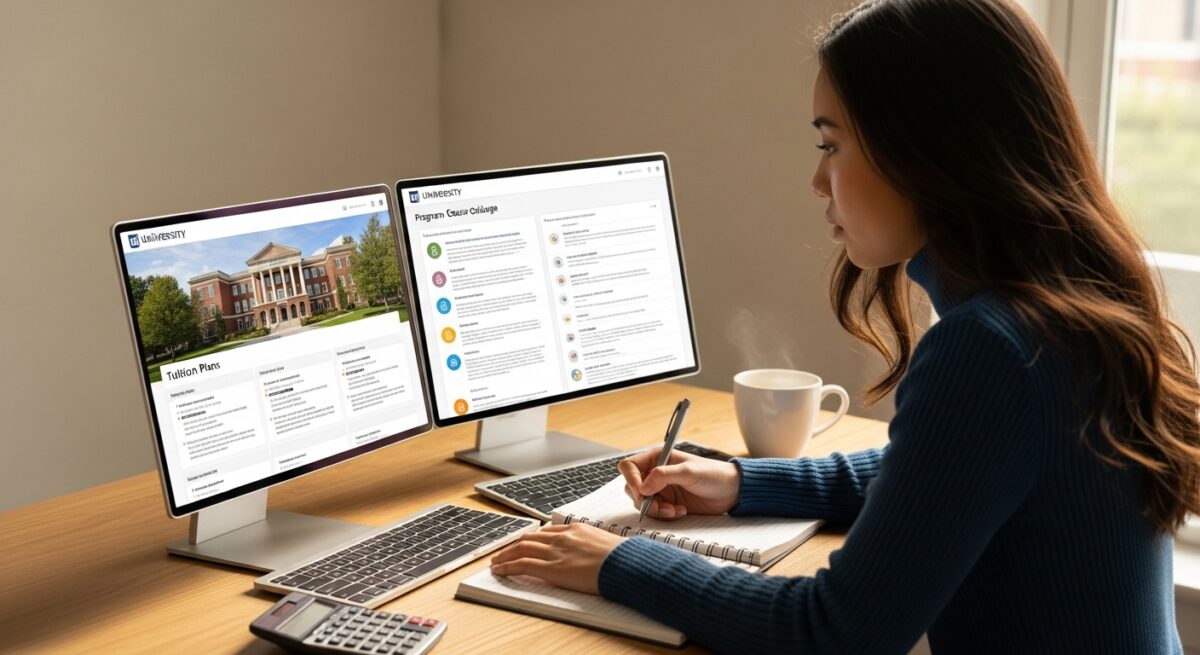
For students across Minnesota and beyond, the pursuit of higher education no longer requires a daily commute to a physical campus. The landscape of learning has fundamentally shifted, with online programs offering unprecedented flexibility and access to quality education. Whether you are a working professional in Minneapolis seeking career advancement, a parent in Duluth balancing family responsibilities, or a recent high school graduate in Rochester looking for an affordable start, Minnesota colleges with online learning programs provide a powerful pathway to achieving your academic and professional goals. These institutions have invested heavily in robust digital platforms, expert faculty training, and comprehensive student support services to create online experiences that rival, and in some cases enhance, the traditional classroom.
Why Choose an Online Program from a Minnesota College?
Selecting an online degree program is a significant decision, and opting for one from an accredited Minnesota institution offers distinct advantages. First and foremost is the assurance of quality and recognition. Minnesota is home to a higher education system renowned for its rigor and innovation, from the extensive University of Minnesota network to the respected Minnesota State colleges and universities and private nonprofits. An online degree from these carries the same accreditation and weight as its on-campus counterpart. This is critical for career mobility and further education.
Beyond prestige, Minnesota colleges design their online programs with the diverse needs of modern learners in mind. The core benefit is flexibility. Asynchronous courses allow you to access lectures, complete assignments, and participate in discussions on your own schedule, which is essential for those managing work, family, or other commitments. This flexibility also translates to geographic freedom. You can enroll in a program offered by a leading university in the Twin Cities while living anywhere in the state, the country, or even the world, provided you meet any residency or time zone requirements. Furthermore, many students find online programs to be more cost-effective when factoring in saved expenses on commuting, parking, and sometimes even course materials.
A Guide to Prominent Minnesota Online College Providers
Minnesota’s higher education ecosystem offers online opportunities through several major systems and independent institutions. Understanding the different providers helps you find the best fit for your academic interests and career aspirations.
The University of Minnesota System
The University of Minnesota, with its five campuses, is a powerhouse in online education. UMN Online coordinates hundreds of programs across the system, from certificates to doctoral degrees. The University of Minnesota Twin Cities and the University of Minnesota Rochester, for example, offer highly regarded online degrees in fields like healthcare administration, business, data science, and education. Their programs often leverage the university’s strong research partnerships and industry connections, providing online students with a curriculum grounded in cutting-edge knowledge and practical application.
The Minnesota State Colleges and Universities System
This vast network, comprising 26 community and technical colleges and seven state universities, is a cornerstone of accessible, career-focused education in Minnesota. Nearly every campus offers online options, making it an excellent source for associate degrees, career-ready certificates, and bachelor’s completion programs. Institutions like Metropolitan State University (noted for its adult learner focus), Winona State University, and Saint Cloud State University have extensive online catalogs. The community colleges, such as North Hennepin Community College or Dakota County Technical College, provide affordable online associate degrees that seamlessly transfer to four-year programs within the system and beyond.
Private Nonprofit and For-Profit Institutions
Minnesota also boasts several private colleges with strong online presences. Schools like Saint Mary’s University of Minnesota and Concordia University, Saint Paul have built national reputations for their online graduate and adult undergraduate programs in business, education, and healthcare. These institutions often feature accelerated course formats, such as eight-week terms, allowing students to progress quickly. It is crucial, however, to always verify the accreditation status of any institution, especially for-profit colleges, to ensure your degree will be recognized by employers and other universities. A thorough understanding of financial aid for online learning is equally vital when comparing costs across different types of schools.
Key Considerations When Selecting Your Online Program
Choosing the right online program requires more than just reviewing a list of majors. You must conduct due diligence to ensure the program aligns with your learning style, goals, and life circumstances. Here are the essential factors to evaluate.
Accreditation: This is non-negotiable. Ensure the college and the specific program (if it has specialized accreditation, like in nursing or engineering) are accredited by an agency recognized by the U.S. Department of Education. Regional accreditation (like the Higher Learning Commission) is the gold standard for academic institutions.
Program Format and Technology: Determine if the program is synchronous (live online classes at set times), asynchronous (work on your own schedule), or a hybrid. Assess the learning management system used (e.g., Canvas, D2L Brightspace) and the technical requirements. Do you need a specific software or a powerful computer?
Student Support Services: A quality online program provides robust support. Investigate the availability of online tutoring, library access, career counseling, technical help desks, and academic advising. How accessible are instructors and advisors? Strong support is a key indicator of a program designed for student success.
Cost and Financial Aid: Tuition for online programs can vary widely. Some schools charge a flat per-credit rate regardless of residency, while others have different rates for in-state and out-of-state online students. Always calculate the total cost, including fees for technology or online course delivery. Explore all financial aid options, as online students are typically eligible for federal aid. For a deep dive into navigating these costs, our resource on financial support for college online provides valuable strategies.
To systematically compare programs, consider the following checklist of questions to ask admissions counselors:
- What is the total estimated cost per credit and for the entire program?
- Is the program accredited, and by which agency?
- What is the typical class size and the ratio of students to faculty?
- What academic and technical support is dedicated to online learners?
- Are there any on-campus or in-person residency requirements?
Popular and High-Demand Online Degree Fields in Minnesota
Minnesota colleges have developed online programs that align with both the state’s strong industry sectors and national employment trends. This focus ensures graduates are prepared for in-demand careers. Some of the most popular online degree pathways include:
Business and Management: This remains a top choice, with online offerings ranging from Associate of Arts in Business to MBA programs. Courses cover management, finance, marketing, and entrepreneurship, providing skills applicable to virtually any industry. Many programs offer specializations in high-growth areas like project management, healthcare administration, or data analytics.
Healthcare and Nursing: Given Minnesota’s prominence in healthcare, online programs in this field are extensive and respected. Options include RN-to-BSN completion programs for working nurses, health information management, healthcare administration, public health, and medical coding. These programs often include clinical or practicum components arranged in the student’s local community.
Education and Teaching: For current educators seeking advancement or career changers entering the field, online programs offer pathways to teaching licenses, master’s degrees in education (M.Ed.), and endorsements in special education, educational leadership, or instructional design. These programs are structured to accommodate the schedules of working teachers.
Information Technology and Computer Science: To meet the booming demand for tech professionals, Minnesota colleges offer online degrees in cybersecurity, software development, IT management, and computer networking. These programs are frequently updated to reflect the latest technologies and often incorporate industry certifications into the curriculum. Exploring different degree pathways for students in tech can reveal specialized options aligned with specific career goals.
Liberal Arts and Sciences: Online bachelor’s degrees in fields like psychology, communication, or sociology provide a versatile foundation for many careers or further graduate study. These programs develop critical thinking, writing, and analytical skills that employers highly value.
Frequently Asked Questions About Online Learning in Minnesota
Are online degrees from Minnesota colleges respected by employers?
Yes, when earned from a regionally accredited institution, an online degree is just as valid as a traditional degree. Employers increasingly recognize the discipline, time management, and technical skills required to succeed in a rigorous online program. The key is the accreditation status of the college, not the delivery method.
How do I interact with professors and classmates in an online program?
Interaction happens through various digital channels: discussion forums, video conferencing (like Zoom), email, and collaborative project tools. Many online programs require active participation in weekly discussions, and group projects are common. Instructors hold virtual office hours and provide detailed feedback on assignments.
Can I get financial aid as an online student?
Absolutely. Online students enrolled in eligible degree programs at accredited institutions qualify for the same federal financial aid (grants, loans, work-study) as on-campus students. You must complete the FAFSA. Additionally, many schools offer scholarships specifically for online or adult learners.
What technology do I need to be successful?
At a minimum, you will need a reliable, high-speed internet connection, a computer that meets the school’s specifications (often with a current operating system and webcam), and a word processing program. Familiarity with basic software and a willingness to learn new platforms is essential.
Is there an application deadline for online programs?
This varies. Many online programs, especially those designed for working adults, offer multiple start dates throughout the year (e.g., fall, spring, summer, and even monthly rolling admissions). Always check the specific program’s website for application deadlines and term start dates.
The evolution of online education has made achieving a college degree more accessible than ever for Minnesotans. By carefully researching accredited Minnesota colleges with online learning programs, you can find a reputable, flexible, and supportive academic environment that fits your life. The investment of time in selecting the right program pays dividends in the form of a quality education that advances your career and personal aspirations without requiring you to put your life on hold. Start by exploring the websites of the university systems highlighted here, attending virtual information sessions, and speaking directly with admissions advisors to take the first step toward your future.
About the Author: Sarah Thompson