
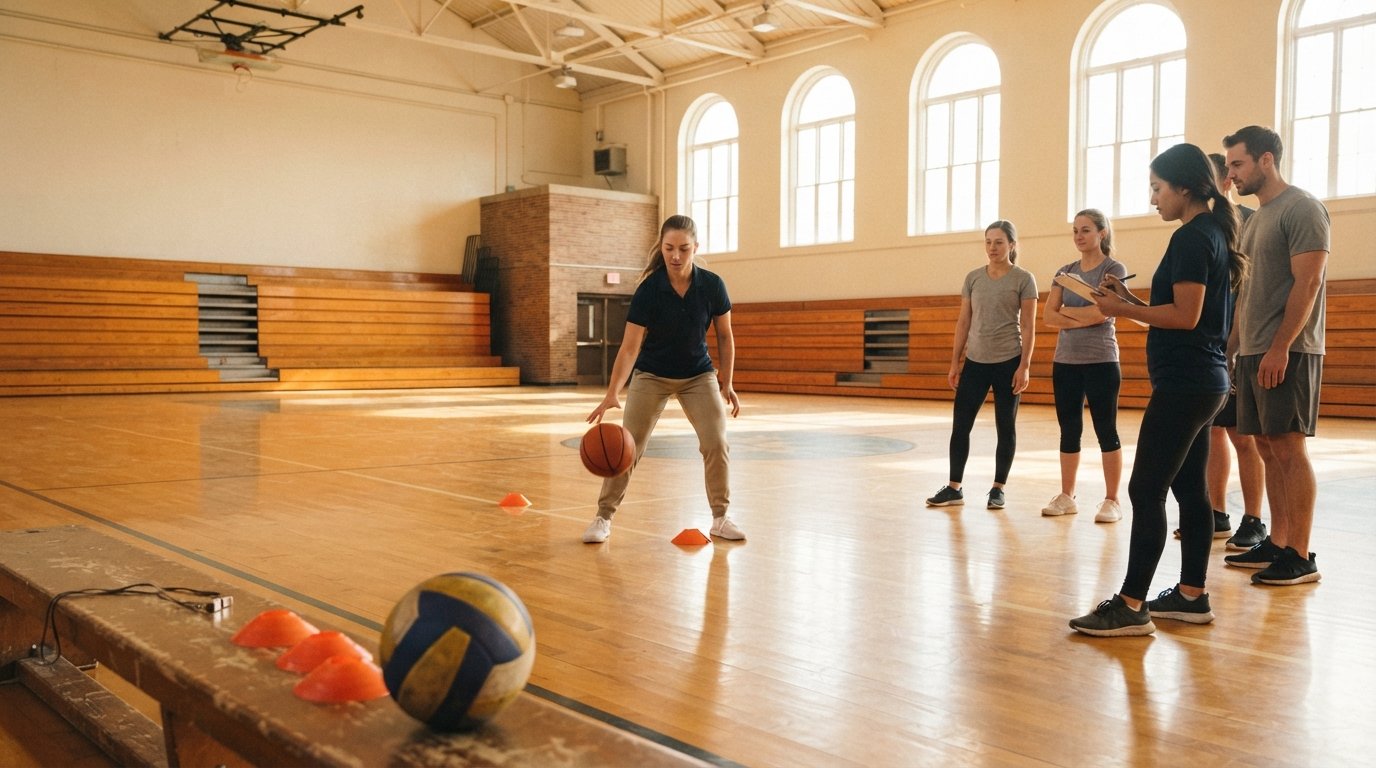
BYU Physical Education Teaching and Coaching Degree
Earn a Physical Education Teaching and Coaching Bachelor's degree, usually 4 years In-person at Brigham Young University, and launch a career in teaching and coaching with hands-on experience.
If you want to teach physical education or coach at the K-12 or collegiate level, a Bachelor's degree in Physical Education Teaching and Coaching from Brigham Young University (BYU) is a direct route to that career. This four-year, in-person program blends pedagogy, kinesiology, and hands-on coaching experience, preparing you for licensure and leadership roles in schools and athletic programs. But before you commit, you need to understand the costs, admission requirements, and career outcomes, especially if affordability is a concern. In this guide, we break down everything you need to know about this degree at BYU, from tuition to curriculum to job prospects, so you can make an informed decision.
Program Overview: What to Expect from BYU's PE Teaching and Coaching Degree
BYU's Physical Education Teaching and Coaching Bachelor's degree is a four-year, campus-based program housed in the Department of Teacher Education within the David O. McKay School of Education. The program leads to a Bachelor of Science (BS) degree and is designed for students who aspire to become physical education teachers and coaches in elementary, secondary, or collegiate settings. Coursework combines foundational classes in anatomy, physiology, and motor development with teaching methods, curriculum design, and sport psychology. You will also complete supervised student teaching and coaching practicums, often in local schools or BYU athletic facilities.
Admission to the program requires formal acceptance into the Teacher Education program, typically during your sophomore or junior year. Prerequisites include general education courses, a minimum GPA (often 2.7 or higher), and completion of specific introductory education courses. Because the program is in-person, you will benefit from face-to-face mentorship, access to campus labs and gymnasiums, and networking opportunities with faculty and local coaches. The degree is accredited by the Council for the Accreditation of Educator Preparation (CAEP), which is important for obtaining a teaching license in most states.
One of the standout features is the integration of coaching theory with practical application. Students often have opportunities to work with BYU's athletic teams or local youth sports organizations, gaining real-world experience before graduation. The program also emphasizes character development and leadership, aligning with BYU's mission. If you are considering a similar path in music education, you might find our guide on online music education degree tuition and certification outcomes helpful for comparing costs and requirements across education fields.
Tuition and Costs: What You Will Pay for This In-Person Program
As a private university, BYU's tuition is relatively affordable compared to many private institutions, especially for members of The Church of Jesus Christ of Latter-day Saints (LDS). For the 2025-2026 academic year, undergraduate tuition is approximately $6,500 per year for LDS students and $13,000 for non-LDS students. These figures cover full-time enrollment (12-18 credits per semester) and do not include room and board, books, or fees. Additional costs include health insurance, transportation, and personal expenses, which can add $10,000 or more annually.
Financial aid is available through federal grants, loans, work-study, and BYU-specific scholarships. LDS students may also benefit from church education subsidies. It is crucial to file the FAFSA early and explore scholarship opportunities through the university and external organizations. For a broader understanding of education costs and financial aid strategies, you can explore resources like Careers.org, which provides career and education planning guidance.
To help you plan, here is a breakdown of estimated annual costs for an LDS student:
- Tuition and fees: $6,500
- Room and board: $8,000
- Books and supplies: $1,000
- Personal expenses: $2,500
- Total estimated cost: $18,000
Non-LDS students should budget roughly $25,000 per year. While these costs are lower than many private colleges, they still require careful financial planning. Consider part-time work, scholarships, and savings to minimize student loan debt.
Curriculum and Hands-On Learning: Courses and Practicum Experiences
The curriculum for the Physical Education Teaching and Coaching degree is comprehensive, covering both theoretical and practical aspects of teaching and coaching. Over four years, you will take courses such as Foundations of Physical Education, Motor Learning and Development, Biomechanics, Exercise Physiology, and Sport Psychology. Teaching methods courses focus on lesson planning, assessment, and classroom management in physical education settings. Coaching-specific courses cover team management, tactics, and athlete development.
Beyond the classroom, the program requires practicum hours in local schools and coaching internships. During your student teaching semester, you will work full-time in a school under the supervision of a mentor teacher, gradually taking on full responsibility for classes. This hands-on experience is invaluable for building your resume and confidence. Many students also volunteer as coaches for youth sports or assist with BYU intramurals, further enhancing their practical skills.
Here is a sample sequence of courses you might take:
- Freshman year: Introduction to Physical Education, Anatomy and Physiology, General Education courses
- Sophomore year: Motor Development, Teaching Methods I, Sport Psychology, admission to Teacher Education program
- Junior year: Biomechanics, Exercise Physiology, Coaching Theory, practicum in local schools
- Senior year: Student teaching, advanced coaching courses, capstone project
This sequence ensures you build a strong foundation before advancing to more specialized and intensive experiences. The program also offers opportunities to work with diverse student populations, including students with disabilities, through adapted physical education courses.
Admission Requirements and Application Process
Admission to BYU is competitive, and the Physical Education Teaching and Coaching program has additional requirements beyond general university admission. First, you must be admitted to BYU as an undergraduate. That involves submitting an application, high school transcripts, ACT or SAT scores (optional for some applicants), and an ecclesiastical endorsement for LDS students. Non-LDS students are also welcome but must agree to abide by the university's honor code.
Once at BYU, you must apply to the Teacher Education program, typically during your sophomore year. Requirements include a minimum cumulative GPA (usually 2.7), completion of prerequisite courses with a grade of C or better, a background check, and a formal application with essays and references. The process is designed to ensure candidates are prepared for the rigors of teaching and coaching. Early planning is essential, as some courses are sequenced and only offered once per year.
Prospective students should also consider the cost of attendance and financial aid options early. BYU offers various scholarships, and filing the FAFSA is necessary for federal aid. It is also wise to explore external scholarships for future educators, such as those offered by local teaching associations or sports organizations.
Career Outcomes and Licensure: What You Can Do with This Degree
Graduates of the Physical Education Teaching and Coaching program at BYU are well-prepared for careers as PE teachers and coaches. Most states require a teaching license to work in public schools, and BYU's program is designed to meet licensure requirements in Utah and many other states. You will need to pass the required Praxis exams or state-specific tests and complete a background check. The program's accreditation and reputation facilitate reciprocity in many states, though you should always check specific state requirements.
Career opportunities include:
- K-12 physical education teacher
- Head coach or assistant coach for school sports teams
- Youth sports coordinator
- Athletic director (with additional experience and often a master's degree)
- Community recreation program leader
Salaries vary by state and district. According to the Bureau of Labor Statistics, the median annual wage for high school teachers was about $62,000 in 2023, with PE teachers falling in a similar range. Coaches may receive stipends on top of teaching salaries. The job outlook for teachers is generally stable, with demand varying by region and subject area. Physical education is often a required subject, which can provide job security.
For those interested in related education careers, such as music education, the path is similar in terms of licensure and teaching requirements. Our article on online music education degree tuition and certification outcomes provides a useful comparison for cost and certification steps.
Is This Program Right for You? Key Considerations
Choosing a Physical Education Teaching and Coaching Bachelor's degree at BYU is a significant decision. It is ideal if you are passionate about sports, fitness, and working with young people, and if you value a faith-based environment with strong community values. The in-person format allows for hands-on learning and mentorship that online programs may not fully replicate. However, you should consider the cost, the commitment to the honor code, and the competitive admission process.
If you are concerned about affordability, compare BYU's tuition to other options, including online degree programs in education. Online programs can be more flexible and sometimes cheaper, but they may lack the same level of practical coaching experience. BYU's program stands out for its integration of teaching and coaching, preparing you for dual roles. If you are unsure about the teaching licensure aspect, you might explore careers in coaching without a teaching license, though many school-based coaching positions require it.
Finally, consider the location: Provo, Utah, offers a vibrant college town atmosphere with access to outdoor recreation. The in-person experience includes networking with peers and faculty, which can be invaluable for job placement. If you are ready to commit to a four-year, in-person program with a strong support system, BYU's Physical Education Teaching and Coaching degree is a solid choice.
In summary, the Physical Education Teaching and Coaching Bachelor's degree at Brigham Young University is a comprehensive, four-year, in-person program that prepares you for a rewarding career in education and athletics. With relatively affordable tuition, hands-on learning, and strong career outcomes, it is a compelling option for aspiring PE teachers and coaches. Just be sure to plan your finances carefully and explore all financial aid opportunities to make the most of your investment.