
Computer Engineering Tech Certificate at Catawba Valley CC
Earn a Computer Engineering Technology/Technician Certificate at Catawba Valley CC in under a year. Hands-on training, fast completion, and job-ready skills.

Finding a fast, affordable path into electronics and computing careers does not have to mean committing to a four-year degree. For students in North Carolina and beyond, the Computer Engineering Technology/Technician Certificate, 12 weeks to less than 1 year In-person at Catawba Valley Community College offers a concentrated, hands-on route to job-ready skills. This program is designed for people who want to build, test, and troubleshoot the hardware and software systems that power modern devices, and they want to do it quickly and without taking on heavy student debt. Whether you are a recent high school graduate, a working adult seeking a career change, or a technician looking to formalize your skills, this short-term certificate can serve as a practical entry point into a growing field. In this guide, we will break down what the program covers, who it is for, how much it costs, and how it stacks up against longer degree options, so you can decide if this in-person certificate at CVCC is the right next step for your career.
What Is a Computer Engineering Technology/Technician Certificate?
A Computer Engineering Technology/Technician certificate is a focused credential that trains students in the fundamentals of computer hardware, electronics, networking, and technical support. Unlike a full associate or bachelor's degree, which typically includes general education requirements and a broader theoretical foundation, a certificate program zeroes in on the practical skills employers need right away. At Catawba Valley Community College, this certificate is delivered entirely in person, which means students get direct access to labs, equipment, and instructors who can demonstrate real-time troubleshooting and repair techniques.
The program length is one of its most attractive features: it can be completed in as little as 12 weeks or up to less than one year, depending on the course schedule and the student's availability. That timeline is ideal for people who need to enter the workforce quickly or who want to test the waters of a technical field before committing to a longer program. Because it is a certificate rather than a degree, the curriculum is streamlined, but it still covers essential topics such as computer hardware, operating systems, basic electronics, and network fundamentals. Graduates leave with a credential that signals to employers that they have hands-on training and are ready for entry-level roles.
It is important to understand that a certificate is not a substitute for a degree if your goal is advanced engineering or management. However, for many technician roles, a certificate is exactly what employers are looking for. It can also serve as a stepping stone: students who complete the certificate may choose to continue into an associate degree program at CVCC, applying the credits they have already earned. This flexibility makes the certificate a low-risk, high-value starting point for a wide range of learners.
Inside the CVCC Computer Engineering Technology/Technician Certificate
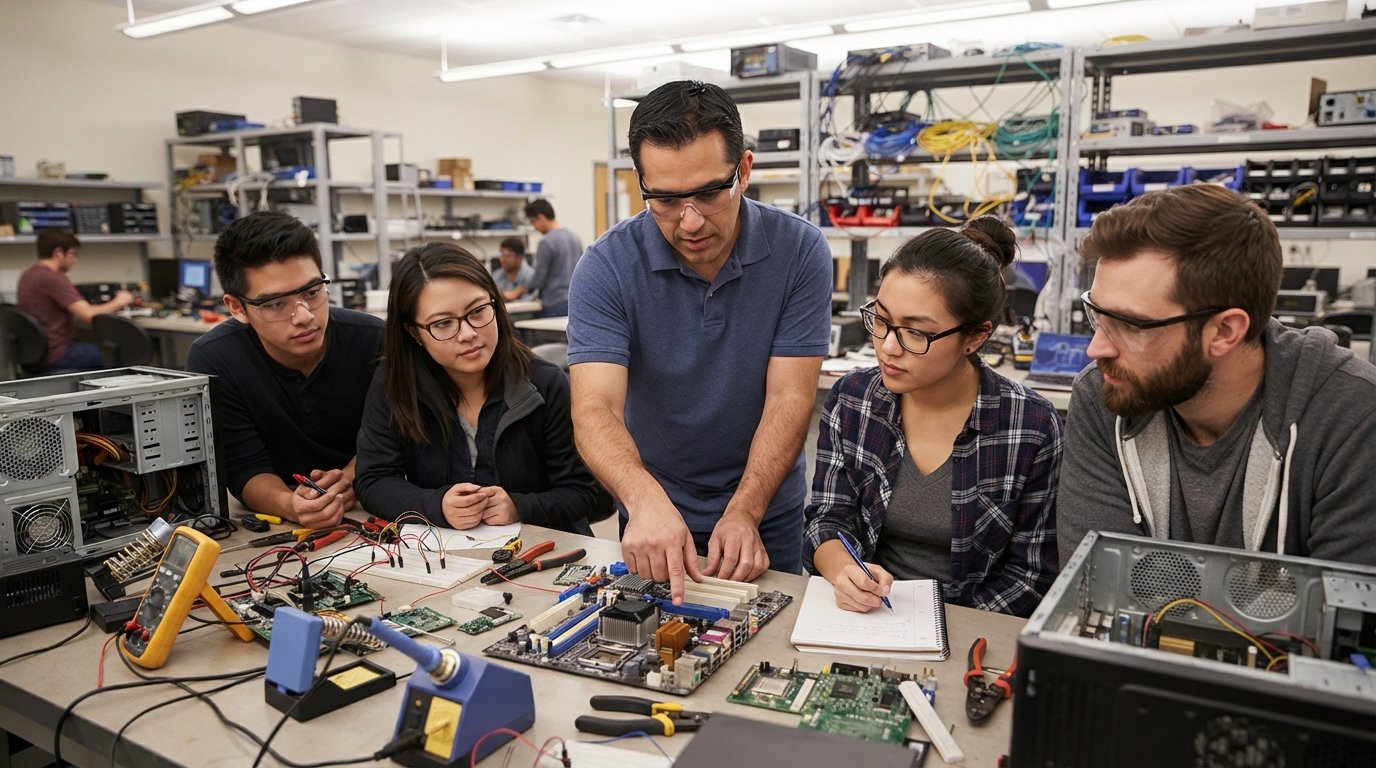
The Computer Engineering Technology/Technician Certificate at Catawba Valley Community College is built around hands-on learning. Because the program is in person, students spend significant time in labs working with actual computer components, diagnostic tools, and networking equipment. The curriculum is designed to mirror the tasks technicians perform on the job, from assembling and upgrading computers to diagnosing hardware failures and configuring basic networks. This practical approach helps students build confidence and a portfolio of skills they can demonstrate to potential employers.
While the exact course sequence may vary, students can expect to cover core areas that form the foundation of computer engineering technology. These typically include:
- Computer hardware and assembly: Understanding motherboards, processors, memory, storage, and power supplies, and learning how to build and repair systems.
- Operating systems and software: Installing, configuring, and troubleshooting Windows and other operating systems, as well as common productivity and diagnostic software.
- Electronics fundamentals: Basic circuit theory, soldering, and the use of multimeters and other test equipment to diagnose electrical issues.
- Networking basics: Introduction to IP addressing, cabling, routers, switches, and wireless technologies, with an emphasis on setup and troubleshooting.
- Technical support and customer service: Developing the communication skills needed to work with users and document technical issues effectively.
These topics are not just academic exercises; they are the same skills that appear in job postings for computer support technicians, field service technicians, and help desk specialists. The in-person format means instructors can provide immediate feedback, and students can collaborate with peers on real equipment. For students who thrive in a hands-on environment, this can be far more effective than purely online instruction.
Another key advantage of the CVCC program is its connection to local industry. Community colleges often partner with regional employers to ensure their curriculum aligns with workforce needs. While specific partnerships can change, students in technical certificate programs frequently benefit from job placement assistance, internships, and networking opportunities. It is worth speaking with an admissions advisor to learn about current employer connections and any work-based learning options that may be available.
Who Should Consider This In-Person Certificate?
The short answer is: anyone who wants a fast, practical entry into the world of computer technology without spending years in school. But let us break that down into specific profiles. First, recent high school graduates who are not ready to commit to a four-year degree but want to start a career in tech will find this certificate appealing. It provides a structured, supportive environment to learn foundational skills and can be completed in a single semester or less. Second, working adults who are looking to change careers or upgrade their skills can benefit from the flexible timeline and focused curriculum. Because the program can be completed in as little as 12 weeks, it is possible to earn the certificate during a gap between jobs or while working part-time.
Third, current technicians who work in adjacent fields, such as electronics assembly or general IT support, may use the certificate to formalize their knowledge and open doors to higher-paying roles. Fourth, students who are unsure about college might use the certificate as a low-cost trial run. If they enjoy the coursework and do well, they can continue into an associate degree; if not, they have lost very little time or money. Finally, the program is suitable for veterans and military spouses who need portable, stackable credentials that can be completed quickly and applied to civilian careers.
It is also worth noting who might not be the best fit. If your goal is to become a computer engineer who designs new processors or writes complex software from scratch, you will likely need a bachelor's degree in computer engineering or a related field. The technician certificate is more about maintaining, troubleshooting, and supporting existing systems. Similarly, if you prefer a fully online learning environment, this in-person program may not suit your schedule or learning style. But for those who want hands-on training and a fast path to employment, the CVCC certificate is a strong contender.
Cost, Financial Aid, and Value
One of the biggest concerns for any prospective student is cost, and community college certificate programs are generally among the most affordable options in higher education. At Catawba Valley Community College, tuition for certificate programs is based on North Carolina residency status and credit hours. North Carolina residents pay significantly lower rates than out-of-state students, and many students qualify for financial aid that can cover most or all of the cost. Because the program is short, the total tuition bill is much smaller than that of a two-year or four-year degree, which means students can avoid taking on large loans.
Financial aid options for certificate programs include federal Pell Grants, state grants, scholarships, and workforce development funding. CVCC has a financial aid office that can help students complete the FAFSA and identify grants and scholarships they may be eligible for. In some cases, short-term workforce programs qualify for specific state funding, such as the NC Workforce Credentials Grant, which can reduce out-of-pocket costs even further. It is always best to speak directly with the financial aid office to get the most accurate and up-to-date information.
When evaluating the value of the certificate, consider the return on investment. Entry-level computer support and technician roles in North Carolina typically pay hourly wages that can quickly recoup the cost of a short certificate program. According to the U.S. Bureau of Labor Statistics, computer support specialists earn a median annual wage of around $60,000 nationally, with variation by region and experience. Even at the lower end of the pay scale, a certificate that costs a few thousand dollars can pay for itself within a year or two of full-time work. Additionally, the certificate can be stacked toward an associate degree, further increasing earning potential over time.
For students who are comparing programs, it is helpful to look beyond tuition alone and consider fees, books, equipment, and transportation. In-person programs may require additional costs for lab fees or tools, though many community colleges provide access to equipment on campus. Prospective students should request a full cost breakdown from the admissions office. For those who are exploring other short-term healthcare credentials as a comparison, our guide on a medical records tech certificate program offers a useful point of reference for how quickly certificate programs can lead to employment.
Admission Requirements and How to Enroll
Admission to the Computer Engineering Technology/Technician Certificate at Catawba Valley Community College is generally straightforward and designed to be accessible. Most community college certificate programs require a high school diploma or equivalent, such as a GED, and completion of a college application. Some programs may also require placement testing in math and English, though many colleges now use multiple measures, including high school transcripts, to determine placement. Because this is an in-person program, students should be prepared to attend classes on campus and may need to provide proof of residency for tuition purposes.
The enrollment process typically follows a sequence. First, prospective students complete the college application online or in person. Second, they submit official transcripts from high school and any previous colleges. Third, they may need to take a placement test or meet with an advisor to discuss course readiness. Fourth, they apply for financial aid by completing the FAFSA. Finally, they register for classes during the designated registration period. Because the program can be completed in as little as 12 weeks, start dates may be more frequent than traditional semester-based programs, so it is worth checking with the college about upcoming cohort start dates.
It is also recommended that students meet with a program advisor before enrolling. An advisor can explain the course sequence, clarify the time commitment, and help students understand how the certificate fits into their broader educational or career goals. For students who are considering continuing to an associate degree, the advisor can map out which credits will transfer and how long the additional coursework will take. This kind of personalized planning is one of the advantages of attending a community college with a dedicated workforce development focus.
Career Outcomes and Job Outlook
Graduates of the Computer Engineering Technology/Technician Certificate at CVCC are prepared for a variety of entry-level roles in the technology field. Common job titles include computer support technician, help desk analyst, field service technician, hardware technician, and network support assistant. These roles exist in almost every industry, from healthcare and education to manufacturing and government, which means graduates have a wide range of employers to choose from. In many cases, these positions serve as a launching pad for further specialization, such as cybersecurity, network administration, or cloud support.
The job outlook for computer support and related occupations remains solid. The Bureau of Labor Statistics projects steady demand for computer support specialists as organizations continue to rely on complex IT systems. While some routine support tasks can be automated, the need for technicians who can troubleshoot hardware, work with users, and handle physical infrastructure remains strong. In regions with a mix of manufacturing, healthcare, and technology employers, such as the area served by Catawba Valley Community College, demand for skilled technicians is particularly consistent.
For students who want to explore the broader landscape of technology careers and understand what different roles involve, resources like Careers.org provide helpful overviews of job duties, education paths, and work settings. Looking at these descriptions can help you decide whether a technician role is the right fit or whether you want to pursue a more specialized path later. The key takeaway is that the certificate opens doors, and it provides a foundation you can build on as your career evolves.
Comparing the Certificate to Other Education Paths
One of the most common questions prospective students ask is whether a certificate is enough, or whether they should pursue an associate or bachelor's degree instead. The answer depends on your goals, timeline, and financial situation. A certificate is the fastest and least expensive way to gain job-ready skills, and it is often sufficient for entry-level technician roles. An associate degree typically takes two years and includes general education courses, which can provide a broader foundation and may lead to higher-paying or more specialized roles. A bachelor's degree takes four years and is generally required for engineering, design, and management positions.
For many students, the certificate is a smart first step. It allows you to enter the workforce quickly, earn money, and gain experience while deciding whether to pursue further education. Some employers offer tuition assistance, which can make it easier to continue your education while working. Additionally, the credits earned in a certificate program often count toward an associate degree at the same college, so you are not starting from scratch if you decide to continue. This stackable approach is one of the hallmarks of community college workforce programs and a major advantage for lifelong learners.
It is also worth comparing the CVCC certificate to other short-term programs in fields like healthcare or trades. While the subject matter is different, the structure and value proposition are similar: focused training, fast completion, and direct pathways to employment. Students who are unsure which field to pursue may benefit from speaking with career counselors or using online resources to compare job duties, salaries, and working conditions. The most important thing is to choose a path that aligns with your interests and strengths, and to recognize that a certificate is a credential you can build on, not a dead end.
Why Choose In-Person Learning at CVCC?
In an era when many programs are moving online, the decision to offer this certificate in person is deliberate. Computer engineering technology is a hands-on field, and many students learn best by physically working with equipment, asking questions in real time, and collaborating with classmates. In-person instruction allows instructors to demonstrate proper techniques, observe students as they practice, and correct mistakes immediately. This can be especially valuable for students who are new to technical fields and who benefit from direct mentorship.
Additionally, in-person programs often provide access to labs and equipment that would be expensive or impractical to replicate at home. Students can use industry-standard tools, work with networking hardware, and practice troubleshooting on real systems. This hands-on experience is a significant advantage when applying for jobs, because employers value practical skills and confidence. The in-person format also fosters relationships with instructors and peers, which can lead to job referrals, study groups, and professional networks that last beyond the program.
Catawba Valley Community College itself is a well-established institution with a reputation for workforce development. Its location in Hickory, North Carolina, puts it at the center of a region with diverse employers, from advanced manufacturing to healthcare. Students who attend CVCC benefit from a supportive campus environment, access to student services, and a curriculum that is designed with input from local industry. For students who value structure, accountability, and face-to-face interaction, the in-person certificate is an excellent fit.
Steps to Get Started
If you are ready to take the next step, here is a practical sequence to follow. First, visit the Catawba Valley Community College website and review the program page for the Computer Engineering Technology/Technician Certificate. Confirm the current start dates, admission requirements, and tuition rates. Second, contact the admissions office or program advisor to ask any questions you have about the curriculum, schedule, and financial aid. Third, complete the college application and submit your transcripts. Fourth, file the FAFSA and explore scholarship options. Fifth, register for classes and prepare for the start of the program.
It is also helpful to talk to people who have completed the program or who work in the field. Ask about their experience, what they found most valuable, and what advice they have for new students. If possible, attend an information session or campus tour to see the labs and meet instructors. These steps will help you make an informed decision and feel confident as you begin.
The Computer Engineering Technology/Technician Certificate, 12 weeks to less than 1 year In-person at Catawba Valley Community College is a practical, affordable, and fast path to a career in technology. It is not the right fit for everyone, but for students who want hands-on training and a quick entry into the workforce, it offers a compelling combination of value, support, and opportunity. By understanding the curriculum, costs, and career outcomes, you can decide whether this certificate is the right investment in your future.